Choosing the right fence contractor can make the difference between a smooth installation and costly problems like permit delays, property line disputes, or warranty issues. Before hiring a fence contractor, ask the right questions so you can compare companies based on more than just price.
Questions to Ask a Fence Contractor
- Are you licensed and insured?
- Who handles permits and inspections?
- Will you verify my property lines?
- What does your warranty cover?
- Can I see recent local projects and references?
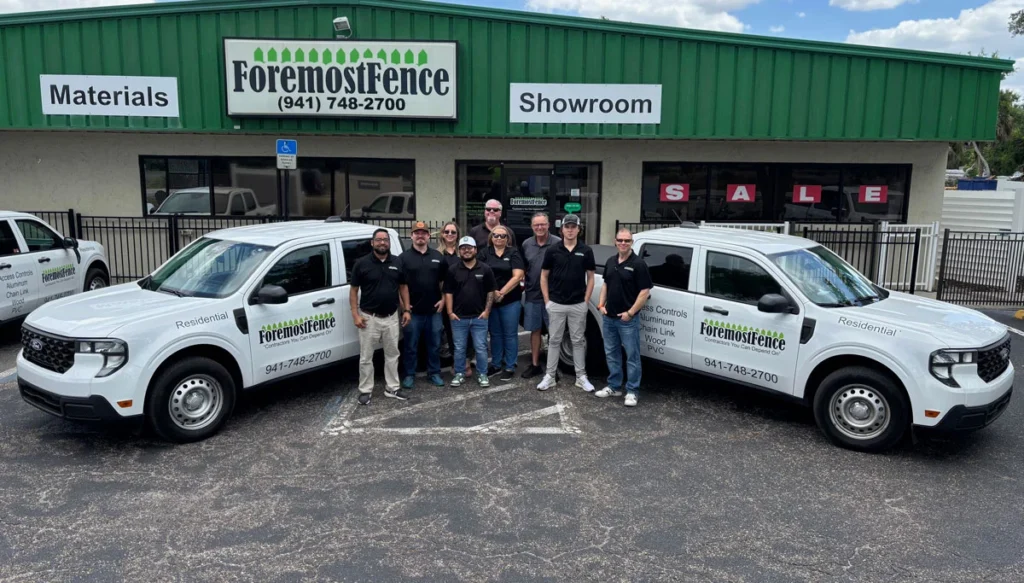
Foremost Fence has helped homeowners throughout Sarasota, Bradenton, Venice, North Port, and the surrounding Southwest Florida communities make informed fencing decisions for years. Below are the most important questions to ask a fence contractor and what answers to look for.
Why the Questions You Ask a Fence Contractor Determine Your Outcome
Considering the right questions to ask a fence contractor can help give you greater confidence that the work will meet local requirements. Doing due diligence can help property owners avoid delays, added costs, and installation problems.
When you ask the right questions, you:
- Protect your investment: Reduce the risk of costly mistakes and failed inspections.
- Avoid HOA and property line issues: Verify permits, boundaries, and community requirements before work begins.
- Confirm licensing and insurance: Make sure you’re hiring a legitimate contractor with proper coverage.
- Look beyond the lowest bid: Compare experience, warranties, communication, and price.
Why Florida’s Contractor Laws Make This More Important Than in Other States
Florida has licensing, permitting, and building requirements that vary by jurisdiction, so experience in your local area matters. Sarasota, Manatee, and Charlotte counties each have their own permitting processes, and a contractor familiar with local requirements can help prevent unnecessary delays.
Before hiring anyone, verify their license through the Florida DBPR’s online license lookup tool.
Questions to Ask About Licensing, Insurance, and Business Legitimacy
These are some of the most important questions to ask a fence company before signing a contract. A reputable contractor should answer them clearly and provide documentation when requested.
“Are You Licensed to Work in This County?”
Ask whether the contractor holds the appropriate Florida license and request their license number so you can verify it through the Florida DBPR. Depending on the jurisdiction, contractors may hold either a state-certified or locally registered license. A contractor who can’t provide a license number or avoids the question is a major red flag.
“Do You Carry General Liability and Workers’ Compensation Insurance?”
General liability insurance helps protect your property if accidental damage occurs, while workers’ compensation covers qualifying crew injuries during the project. Ask for a current Certificate of Insurance (COI) before work begins. Be cautious if a contractor says insurance isn’t necessary because they have a “small crew.”
“How Long Have You Been Installing Fences in This Area?”
Local experience matters because Florida’s climate, soils, permitting requirements, and coastal conditions can affect how a fence should be built. Contractors familiar with Sarasota, Manatee, and Charlotte counties typically understand local permitting processes and installation challenges better than companies new to the area.
Questions to Ask About Permits, HOA Approval, and Property Lines
Many fence disputes begin before installation ever starts. Asking these questions early can help you avoid delays, fines, and expensive corrections.
“Will You Pull the Permit, or Do I Need To?”
Ask who is responsible for obtaining any required permits before work begins. A reputable contractor should explain the permit process and provide copies of approved permits when required. Be cautious if you’re asked to pull the permit yourself without a clear explanation.
“Does This Fence Require HOA Approval, and Will You Help Me Get It?”
Many Sarasota, Bradenton, Venice, and North Port neighborhoods have HOA rules that regulate fence height, materials, and placement. A good contractor will ask about HOA requirements before installation and help ensure the project aligns with them. Have your HOA guidelines available before your estimate.
“Will You Verify My Property Lines Before Installation?”
A responsible contractor should ask for a recent survey or recommend one if property lines are unclear. Never assume an existing fence marks the legal boundary. Using an old fence as a guide is a major red flag that can lead to costly disputes.
Questions to Ask About Materials, Timeline, and Warranty
The right materials and a clear contract can make just as much difference as the installation itself. Ask these questions before signing so you know exactly what to expect.
“What Materials Do You Recommend for My Property, and Why?”
A good contractor recommends materials based on your property’s location, exposure, and goals. Vinyl and aluminum often perform well near the Florida coast, while pressure-treated wood remains a popular inland option. Comparing different residential and commercial fencing options can help you choose the best material for your property.
“What Does Your Written Contract Cover, and What Is the Payment Schedule?”
Your contract should clearly outline the materials, project timeline, payment schedule, cleanup, and warranty details. Avoid contractors who ask for full payment upfront or provide only a verbal estimate.
“What Warranty Do You Provide on Labor, and What Does the Manufacturer Warrant on Materials?”
Ask about both the workmanship warranty and the manufacturer’s material warranty, since they cover different issues. Request both warranties in writing and ask how the contractor will handle installation-related issues after the project is complete. Warranty coverage can vary by material, especially when comparing multiple fencing options.
Fence Contractor Red Flags That Should End the Conversation
Asking the right questions is only half the process. Watch for these fence contractor red flags before you sign a contract.
Red Flags Before the Contract Is Signed
- Can’t provide a license number: A legitimate contractor should be able to provide their license information when asked.
- Requests full payment upfront: Many reputable contractors use a milestone-based payment schedule instead of requiring the full balance before work begins.
- No verifiable business address: A verifiable business address makes it easier to contact the company if problems arise.
- Estimate is much lower than everyone else’s: An unusually low price may mean lower-quality materials, missing work, or unexpected change orders later.
Red Flags During and After the Estimate
- Won’t provide a written contract: Your agreement should clearly outline the scope of work, materials, timeline, and warranty.
- Asks you to pull the permit: Ask why. In many cases, the contractor should manage the permitting process when permits are required.
- Can’t provide proof of insurance: A reputable contractor should have current general liability and workers’ compensation documentation available upon request.
Frequently Asked Questions
How do I verify a fence contractor’s license in Florida?
Visit myfloridalicense.com and use the “Verify a License” search tool. Confirm the license is active and valid for the appropriate jurisdiction or statewide.
Do I need a permit to install a fence in Sarasota County?
In most cases, yes. A reputable fence contractor in Sarasota, FL should explain the permit requirements and handle the process when required.
What questions should I ask a fence company about warranties?
Ask about both the labor warranty and the manufacturer’s material warranty, and get both in writing before work begins.
How many fence contractor quotes should I get before deciding?
Get at least three written quotes so you can compare pricing, materials, warranties, and contractor qualifications.
Can a fence contractor start work without HOA approval in Florida?
They can, but doing so may lead to fines or fence removal if your HOA doesn’t approve the project. Obtain HOA approval before installation begins.